Watercolor Deer Clipart: An Embroidery Review
As a professional embroidery designer and product reviewer, I approach every new digital asset with a specific question: will this actually stitch out beautifully on real fabric? When evaluating the Watercolor Deer, Cute Deer Clipart for potential use in commercial and personal projects, my focus shifts immediately from screen aesthetics to needle performance. This illustration category offers a distinct softness that is highly sought after in the handmade market, but translating watercolor art into a machine embroidery design requires careful consideration of stitch density, fabric texture, and overall composition.
First Impressions and Visual Personality
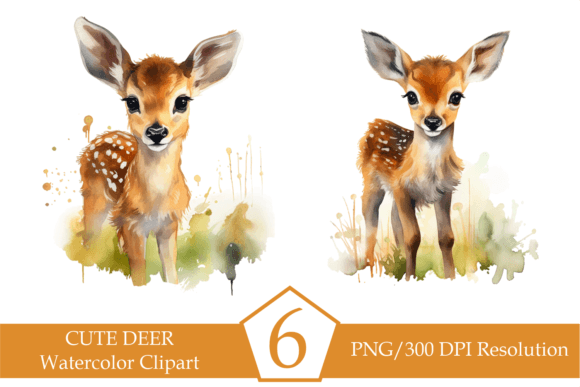
Upon opening the Watercolor Deer, Cute Deer Clipart file, the immediate impression is one of gentle nostalgia and woodland whimsy. The design possesses an organic flow that differs significantly from rigid vector art or cartoon-style graphics. For an Etsy seller or boutique owner, this visual personality is gold. It evokes feelings of comfort, nature, and artisanal quality. However, as an embroiderer, I am looking at the edges. Watercolor styles often feature soft, bleeding borders rather than hard outlines. In a digital embroidery file, this means the digitizer must have used complex fill stitches or blending techniques to replicate that painted effect without creating a bulletproof patch of thread.
The mood of this cute deer clipart suggests it belongs on natural fibers. I can instantly visualize this design on unbleached linen tea towels, cream-colored sweatshirts, or organic cotton baby bibs. It does not scream for neon polyester threads or high-gloss rayon; instead, it demands matte cotton or silk-finish threads to maintain its illustrative integrity. If you are planning custom apparel or nursery decor, this design serves as a focal point that feels expensive and thoughtful rather than mass-produced.
Real-World Application: The Custom Tote Bag Test
To truly evaluate this asset, I mentally placed it into a recent client project scenario: a personalized tote bag for a fall wedding favor. Tote bags are a staple small shop product, but they present unique challenges due to canvas weave and structural seams. Using the Watercolor Deer, Cute Deer Clipart for this application requires strategic placement.
In this real-life case, the deer would serve as the central motif above the couple's names. Because tote bag canvas has a visible texture, the embroidery file needs enough coverage to prevent the fabric grain from disrupting the image. A running stitch outline might get lost in the weave, so I would look for a satin stitch border or a denser fill stitch definition in the deer’s silhouette. The "cute" factor here works in our favor; wedding guests appreciate handmade items that feel delicate. However, if the digitization is too sparse, the watercolor effect will look muddy against the coarse canvas. This highlights the importance of reviewing the stitch type before committing to production. For this specific project, the design adds significant perceived value, transforming a generic bag into a cherished keepsake.
Navigating Fabric Choices and Hoop Limitations
While the Watercolor Deer, Cute Deer Clipart is versatile, it is not universally forgiving. Through years of testing embroidery projects, I have found that illustrative designs with watercolor aesthetics perform best on stable, light-to-medium weight fabrics. Dark fabrics are particularly risky. Watercolor art relies on transparency and light reflection; stitching white or pastel threads onto black denim often results in a chalky appearance that loses the original design's depth. If you must use dark garments, verify that the embroidery file includes a white underlay base, or consider using this design exclusively as an embroidered patch that can be attached later.
Hoop size is another critical constraint. Cute deer illustrations often include fine details like eyelashes, antler tines, or floral accents. If you attempt to resize this design down to a 2x2 inch hoop for a baby onesie collar or cap, those details may turn into thread blobs. Caps are especially tricky due to their curved surface and center seam; intricate watercolor shading can distort easily on such uneven terrain. I recommend reserving this specific clipart for flat embroidery surfaces like pillow covers, aprons, blanket corners, or the chest area of sweatshirts where the fabric remains taut and stable during stitching.
Critical Designer Notes for Success
Before you load this digital embroidery file into your machine for a commercial run or a precious personalized gift, adhere to these practical protocols:
- Test Stitch on Scrap Fabric: Never assume the digitization matches your fabric weight. Stitch out the Watercolor Deer, Cute Deer Clipart on a scrap piece identical to your finished product. Check if the watercolor shading translates smoothly or if there are excessive jump stitches.
- Evaluate Stabilizer Needs: Illustrative designs can be stitch-heavy. Use a cut-away stabilizer for stretchy knits like sweatshirt fleece to prevent puckering. For woven fabrics like tea towels, a tear-away may suffice, but only if the stitch density is moderate.
- Check Thread Color Contrast: Watercolor effects rely on subtle color gradients. Ensure your thread colors match the digital preview closely. A slight variance in beige or brown thread can flatten the dimensional look of the deer.
- Review Licensing for Commercial Use: As an Etsy seller or craft business owner, confirm whether this clipart allows for physical product sales versus digital redistribution. Protect your shop by understanding the terms before listing any finished product.
- Mockup Realistically: When creating printable mockups for your online listings, avoid placing the design on perfectly smooth digital textures if you plan to stitch on linen. Show customers what the embroidery actually looks like to build trust and manage expectations.
Impact on Brand Value and Customer Perception
Incorporating high-quality illustrations like the Watercolor Deer, Cute Deer Clipart into your product line signals professionalism. Customers browsing handmade marketplaces are increasingly savvy; they can distinguish between a hastily converted JPEG and a thoughtfully digitized embroidery design. When the stitch-out is clean, with proper registration and appropriate density, it elevates your entire brand. It tells the buyer that you care about the tactile experience of the item, not just the visual concept.
For creative entrepreneurs selling digital assets or finished goods, this design bridges the gap between trendy and timeless. While fads come and go, the aesthetic of a watercolor forest animal remains a consistent seller in the baby, wedding, and home decor niches. By treating this clipart as a premium component of your workflow—testing it, respecting its limitations, and pairing it with suitable materials—you ensure that every embroidered patch, holiday gift, or boutique item bearing this deer maintains the highest standard of handmade excellence. Always remember that the success of any embroidery project lies not just in the beauty of the source art, but in the technical diligence of the maker.