Watercolor Halloween Cupcake Clipart Review
As a professional embroidery digitizer and product reviewer, I approach every new graphic asset with a specific question: will this actually stitch out well, or is it just a pretty picture? When evaluating Watercolor Halloween Cupcake Clipart for real-world application, my focus shifts immediately from digital aesthetics to physical execution. This design category falls under Illustrations, which often presents unique challenges for machine embroidery. Watercolor styles rely on soft edges, color blending, and organic textures that do not naturally translate to thread without careful interpretation. My assessment below is based on how this artwork performs when converted into a tangible embroidery project for commercial and personal use.
Translating Soft Art to Structured Stitches
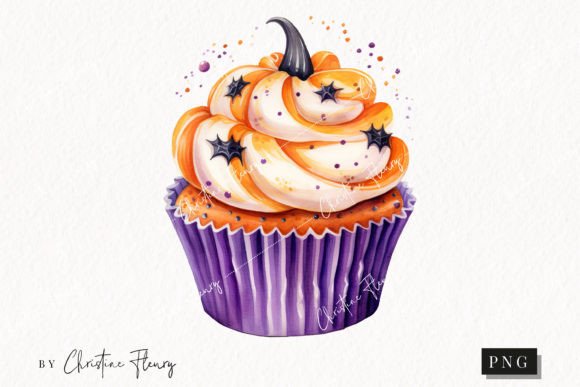
The first impression of this Watercolor Halloween Cupcake Clipart is undeniably charming. It captures a whimsical, nostalgic mood that avoids the scary or gory tropes often associated with the holiday. For an Etsy seller or small shop product creator, this softer aesthetic is valuable because it appeals to a broader demographic, including parents looking for baby embroidery or customers wanting subtle seasonal decor. However, the "watercolor" aspect requires scrutiny. In a digital file, gradients are seamless; in an embroidery file, they must be simulated through thread blending or specific stitch types.
When reviewing this clipart for digitizing potential, I look at the definition of the cupcake liner versus the frosting. If the original illustration lacks distinct separation lines, the resulting machine embroidery design may appear muddy. A successful conversion requires establishing clear boundaries for satin stitch outlines or utilizing running stitch details to define the watercolor washes. The visual personality here is playful yet detailed, suggesting it belongs on items where the viewer can appreciate texture up close, rather than large-scale signage where fine watercolor nuances might get lost.
Real-World Application: The Custom Sweatshirt Test
To truly judge the viability of this design, I mentally placed it in a current production scenario: creating a custom autumn collection of crewneck sweatshirts for a boutique client. Sweatshirt fleece is a textured, somewhat unstable fabric that demands respect. Using Watercolor Halloween Cupcake Clipart in this context requires strategic planning. The soft, painted look of the clipart contrasts beautifully with the cozy fabric, but only if the stitch density is managed correctly.
If I were digitizing this for a sweatshirt embroidery project, I would avoid heavy fill stitches that mimic the watercolor effect too aggressively. Dense stitching on fleece can cause puckering or create a bulletproof patch effect that ruins the garment's drape. Instead, this clipart serves best as a guide for a lighter, more artistic interpretation. Perhaps the frosting uses a light fill stitch with variable density to suggest shading, while the sprinkles and liner rely on crisp satin columns. This balance ensures the finished product remains soft to the touch—a critical factor for customer satisfaction in custom apparel. For a tote bag design, the canvas provides a flatter surface, allowing for slightly higher detail retention, making the watercolor texture more visible and accurate to the original art.
Navigating Fabric Limitations and Hoop Constraints
While versatile, this design type has specific limitations that makers must acknowledge. Not every substrate is friendly to watercolor-style embroidery. I advise extreme caution when applying designs derived from this clipart to stretchy performance fabrics or very thin knits. The complexity required to simulate a painted look often increases stitch count, which can distort lightweight materials even with proper stabilizer.
Furthermore, consider the hoop size. Watercolor effects need space to breathe. Shrinking this design down to a 2-inch logo size for a cap or pocket will likely result in a loss of the defining characteristics that make it special. Tiny lettering or minute decorative accents within the cupcake illustration may turn into indistinguishable blobs when scaled down. For embroidered patch creation, the design works exceptionally well because patches are typically stitched densely on stable twill, supporting the intricate color transitions. Conversely, for curved surfaces like caps, the flat perspective of a cupcake illustration might need geometric adjustment to prevent distortion during the stitching process.
Dark fabrics also present a challenge. Watercolor clipart is usually designed on white or transparent backgrounds. Stitching this directly onto black or navy fabric without a white underlay base will cause the pastel thread colors to disappear or look dingy. Always test contrast before committing to a full production run.
Commercial Value and Brand Consistency
For creative entrepreneurs, the value of Watercolor Halloween Cupcake Clipart extends beyond a single stitch-out. It acts as a cohesive branding element. When used across multiple products—matching a personalized gift tag, a nursery pillow, and a mama sweatshirt—it creates a recognizable shop identity. Buyers trust shops that demonstrate consistency in style and quality. A poorly executed watercolor design that looks jagged or thread-heavy undermines that trust.
This clipart also excels in marketing. Before you even thread your needle, use the high-resolution source file to create a printable mockup for your listings. Customers often struggle to visualize how a digital illustration translates to thread. Showing both the original art and a photo of the actual handmade product bridges that gap. It validates the purchase decision and sets accurate expectations. Whether you are selling the physical item or the digital embroidery file itself, presenting the design professionally signals that you understand the medium.
Essential Designer Notes for Success
Before adding this asset to your library or production queue, adhere to these practical guidelines to ensure professional results:
- Verify Licensing: Always confirm whether the clipart license permits commercial embroidery use, especially if you plan to sell the digitized files or mass-produce items. Terms vary significantly between designers.
- Test on Scrap Fabric: Never assume settings transfer perfectly. Stitch a sample on the exact fabric and stabilizer combination you intend to use for the final project to check for registration issues.
- Analyze Color Mapping: Watercolor relies on nuance. Map your thread colors carefully to capture the gradient effects. Sometimes using two similar shades in alternating rows creates a better blend than a single variegated thread.
- Check Detail Integrity: Inspect small elements like facial features on the cupcake or tiny sprinkles. If they are smaller than 1mm in the digitized version, simplify or remove them to prevent needle breaks and thread bunching.
- Stabilizer Selection: Match the support to the weight. Use cut-away for stretchy knits and tear-away for stable wovens. For watercolor styles, a mesh cut-away often prevents show-through while maintaining necessary stability.
- Mockup Validation: Test your listing photos in black and white. If the design lacks contrast and clarity without color, it may need bolder outlines or deeper shading values to read well in thumbnails.
Ultimately, Watercolor Halloween Cupcake Clipart offers a delightful foundation for seasonal collections, provided it is treated with technical respect. It bridges the gap between digital artistry and textile craft, offering craft business owners a chance to create goods that feel both handmade and professionally refined. By understanding the interplay between the soft source art and the structured nature of thread, you can transform this illustration into a best-selling holiday embroidery staple that delights customers and stands up to wear.