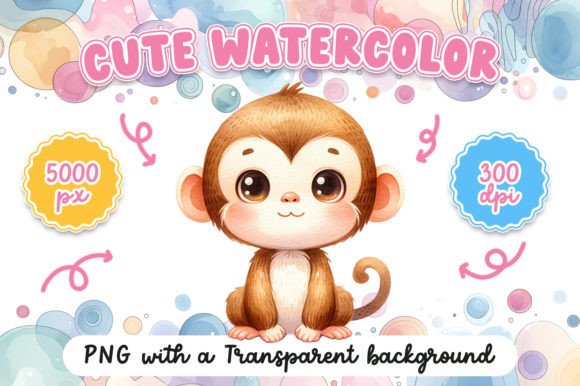
Cute Watercolor Monkey Illustrations for Editorial Design
As a blog designer and digital publisher, I evaluate every graphic design asset through the lens of conversion, readability, and brand consistency. When reviewing the Cute Watercolor Monkey collection, my immediate assessment focuses on its utility within a real publishing workflow. This is not merely decorative clip art; it is a specialized visual tool that establishes an immediate emotional connection with readers. The hand-painted aesthetic creates a mood that is simultaneously nostalgic, approachable, and soft. In editorial design, this specific texture signals to the audience that the content is personal, curated, and safe. For niches ranging from parenting and early childhood education to lifestyle blogging and creative journaling, this asset bridges the gap between professional polish and authentic warmth.
The first impression this illustration set creates is distinctly feminine and gentle, yet it retains enough structural clarity to function in modern web layouts. Unlike vector art which can sometimes feel sterile or corporate, the watercolor medium introduces organic imperfections that build reader trust. When a visitor lands on a page featuring these visuals, they subconsciously categorize the site as a boutique or community-driven resource rather than a generic content farm. This distinction is vital for small business branding where personality is the primary differentiator. The palette typically associated with this style supports high-readability backgrounds, ensuring that while the image captures attention, it does not compete aggressively with body copy or call-to-action buttons.
Strategic Applications Across Content Formats
In my daily publishing operations, versatility is non-negotiable. A single digital download must serve multiple purposes across the content ecosystem to justify the investment. The Cute Watercolor Monkey asset excels here because of its isolated composition and balanced negative space. I have found it particularly effective when integrated into Canva template systems for recurring content series. Because the edges are soft and often transparent, it layers seamlessly over colored blocks or textured paper backgrounds without requiring complex masking techniques.
- Blog Graphics and Featured Images: Use the monkey as a focal point offset to the left or right third of the canvas. This maintains a clear visual hierarchy, allowing headline text to remain legible on both desktop and mobile feeds.
- Pinterest Pin Creation: Vertical pins require strong top-third imagery. This illustration provides an instant hook for users scrolling through educational or parenting boards, significantly improving click-through potential compared to stock photography.
- Digital Product Packaging: For creators selling worksheets, coloring pages, or printable design resources, this asset serves as ideal cover art. It visually communicates the target age group and tone before the customer even reads the sales copy.
- Email Marketing Headers: Newsletter banners often suffer from clutter. A centered or side-aligned watercolor element adds seasonal or thematic relevance without increasing file size excessively or distracting from the email’s primary link.
- Lead Magnet Covers: When designing PDF checklists or digital guide covers, this illustration adds perceived value. It transforms a simple document into a branded resource that subscribers want to save and share.
Enhancing Performance Through Visual Consistency
Content marketing relies heavily on pattern recognition. When you utilize consistent design assets like the Cute Watercolor Monkey across your platform, you accelerate brand recall. Readers begin to associate this specific artistic style with your voice and expertise. From a performance standpoint, illustrations often outperform generic stock photos in affiliate marketing contexts because they feel less like advertisements and more like native recommendations. The playful nature of this asset disarms skepticism, making it easier to transition readers from casual browsing to engaged consumption of affiliate links or product reviews.
Furthermore, this asset supports better category recognition. If you run a multi-author blog or a large content site, assigning specific illustrative styles to different categories helps users navigate intuitively. The Cute Watercolor Monkey could effectively anchor a "Kids Activities," "Parenting Tips," or "Creative Living" section, creating a cohesive brand identity that spans hundreds of posts. This level of editorial design sophistication signals to advertisers and partners that the publication is managed professionally, potentially opening doors for higher-tier sponsorships and collaborations.
Optimal Placement and Contextual Awareness
While versatile, this asset has specific environments where it thrives and others where it requires restraint. Understanding these boundaries is what separates amateur design from professional publishing. The Cute Watercolor Monkey works best in hero images, article thumbnails, and social media graphics where the background is clean or complementary. It shines in layouts that embrace whitespace and soft typography. Conversely, publishers should exercise caution when placing this asset in highly technical, corporate, or somber contexts. The inherent playfulness may clash with serious financial advice, legal disclaimers, or crisis-related content, potentially undermining the authority of the text.
Additionally, be mindful of scale on mobile devices. Watercolor details can become muddy when compressed into tiny thumbnail sizes. Always preview the asset at actual display dimensions. If the facial features or brush strokes lose definition at 150 pixels wide, reserve it for larger header placements or printable resources instead. Avoid using it on busy photographic backgrounds where the soft edges will disappear; it needs breathing room to maintain its charm and effectiveness as a visual anchor.
Technical Workflow and Publisher Checklist
Before deploying any creative design element to a live production site, I run through a rigorous quality assurance process. This ensures the asset enhances rather than hinders user experience. Below is the checklist I recommend for integrating the Cute Watercolor Monkey into your publishing workflow:
- Verify Commercial License: Before using this on monetized blogs, affiliate pages, or paid digital products, confirm the licensing terms. Ensure you have the appropriate commercial license for your specific use case, especially if modifying the artwork or including it in items for resale.
- Test Typography Pairings: Experiment with various font combinations. This illustration pairs beautifully with rounded sans-serifs, handwritten scripts, and soft serifs. Avoid harsh, geometric display fonts that may create visual friction against the organic brushwork.
- Check Contrast and Accessibility: Ensure sufficient contrast between the illustration and any overlaid text. Watercolors can have variable opacity, so always test readability against the lightest and darkest parts of the image. Add a subtle drop shadow or text background if necessary.
- Optimize File Size: High-resolution PNGs are great for print but detrimental to web speed. Create separate web-optimized versions (WebP or compressed PNG) for blog use. Keep website header files under 200KB where possible to maintain Core Web Vitals scores.
- Preview in Grayscale: View the asset in black and white to ensure the tonal values hold up. If the image looks flat or indistinct without color, it may not reproduce well in certain e-readers or low-quality printouts.
- Audit Mobile Rendering: Check how the asset behaves in responsive containers. Ensure it doesn't get cropped awkwardly or push critical content below the fold on smaller screens.
Integrating the Cute Watercolor Monkey into your creative marketplace strategy or personal blog requires intentionality. It is a powerful asset for creators who understand that modern design is about more than just aesthetics; it is about communication. By leveraging this illustration thoughtfully, you enhance the tactile quality of your digital presence, foster deeper emotional engagement with your audience, and elevate the overall professionalism of your content publishing efforts. Whether used for a lead magnet, a seasonal campaign, or evergreen blog graphics, this asset offers a unique blend of charm and functionality that supports sustainable growth in the digital space.